Dear Heads of Government/State,
The global burden of noncommunicable diseases (NCDs)* is unacceptable, inequitable, and increasing. NCDs such as diabetes, cancer, cardiovascular diseases, chronic respiratory conditions, neurological conditions, and mental ill health, are the leading cause of death and disability worldwide. With at least one in three people living with an NCD and half the world's population lacking essential health services, many are not receiving the care they need.
We represent the voices of billions of people living with NCDs, their families, and their caregivers. We urge governments to fulfil their responsibility to protect current and future generations from the risk factors that cause NCDs and provide healthcare for those who need it. We assert the right of civil society, especially people living with NCDs, to be actively engaged in all relevant health processes and decision‑making.
NCDs are at the heart of many global issues. They represent one of the major threats to achieving sustainable health and development. NCDs are both a cause and a consequence of poverty, with people living with NCDs being at increased risk during health and humanitarian emergencies. Failure to implement tried-and-tested solutions widens the gap between rich and poor and needlessly costs the global economy trillions of dollars.
Health and wellbeing are not purely a matter of choice; they are shaped by the social, environmental, and economic conditions into which we are born, live, and work. Those experiencing the heaviest burden from NCDs live in low- and middle-income countries and communities. Health-harming industries drive exposure to NCD risk factors such as tobacco, alcohol, unhealthy foods, and air pollution—heavily associated with fossil fuels.
Addressing the prevention and control of NCDs is integral to ensuring progress towards achieving the Sustainable Development Goals (SDGs). By doing so, we can simultaneously address other global development crises and threats to wellbeing, advancing towards a more resilient, sustainable, and equitable world for all. This is the responsibility of all governments.
Over the last two decades NCDs were raised high on the policy and political agenda. In target 3.4 of the SDGs, all UN Member States committed to a one-third reduction in premature deaths from NCDs and the promotion of mental health and wellbeing by 2030. However, implementation is progressing at a glacial pace, leaving the world far off track from achieving this target.
Great leadership leads to great progress. It is time to turn intent into action.
We call on all governments to fulfil their commitments to tackle the NCD burden, and urge Member States at the UN Fourth High-level Meeting on NCDs in September 2025 to:
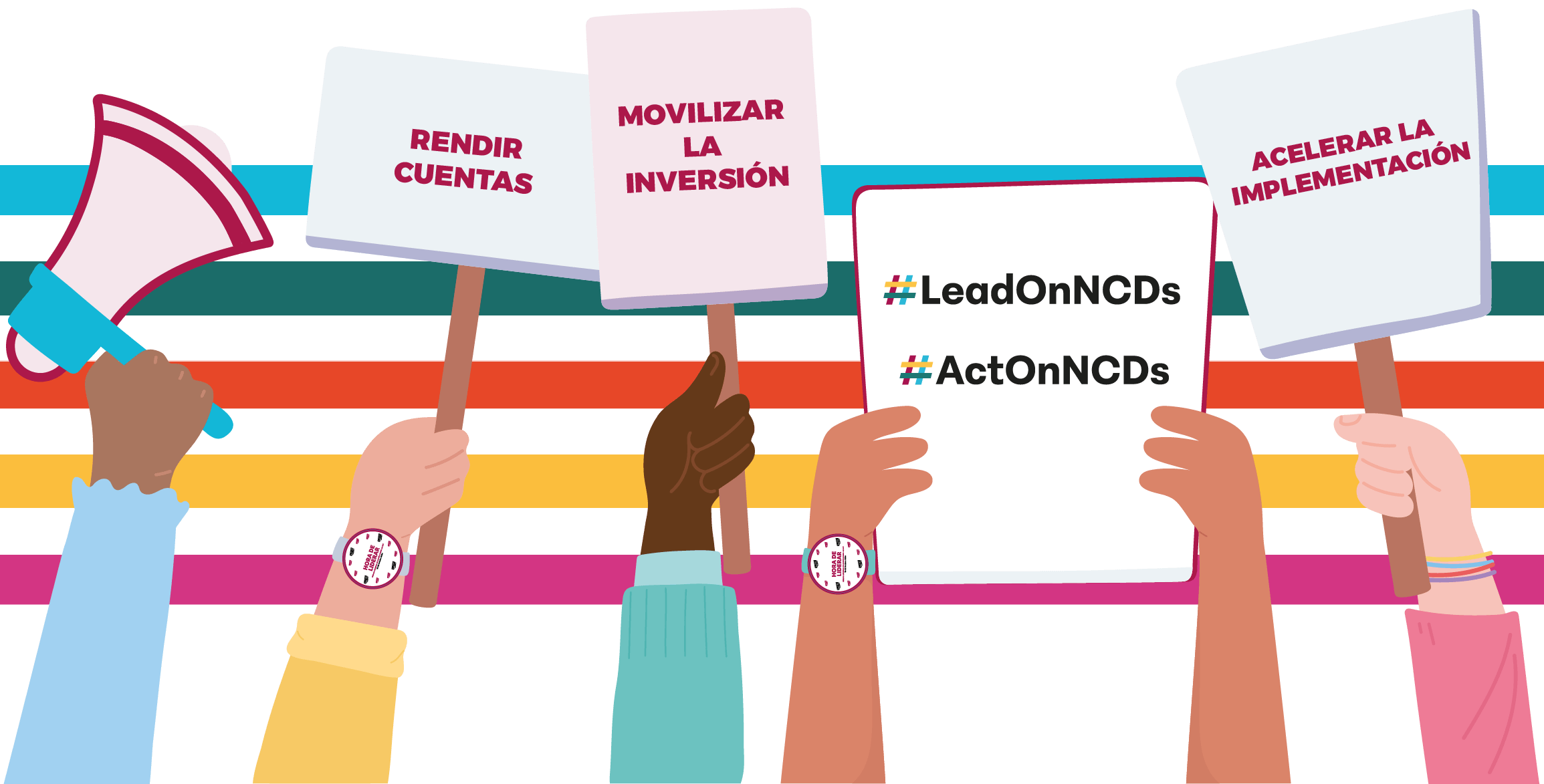
- MOBILISE INVESTMENT by increasing sustainable funding for health that includes specific and measurable financing targets for NCDs strategies and maximises the win-win from health taxes and other fiscal measures.
- ACCELERATE IMPLEMENTATION by delivering the proven, cost-effective policies to reduce NCD risk factor exposure, integrating quality NCD interventions into person-centred care and universal health coverage benefit packages, and expanding access to essential NCD medicines, technologies, and resources.
- DELIVER ACCOUNTABILITY by regularly monitoring and reporting to citizens and the global community on an updated set of NCD targets extended to 2030 and beyond; and by integrating NCD commitments into the post-SDG agenda.
Millions of people die from preventable NCDs every year, and millions more live with long-term disabilities. NCDs affect families and communities worldwide—we have all been affected. We know what needs to be done and how to do it. We stand ready to support and lead alongside governments.
Now is the time to take immediate, decisive action. Now is the time to lead.
*NCDs encompass a wide range of chronic conditions beyond the five major ones. These include obesity, renal, liver, and gastroenterological diseases, bone and joint conditions (such as osteoporosis and arthritis), oral, eye, and ear diseases, metabolic, autoimmune, and inflammatory disorders (such as psoriasis and lupus), genetic disorders (such as sickle cell disease and haemophilia), as well as injuries and disabilities. These conditions can exist as standalone issues or as multimorbidities, significantly impacting individuals and communities worldwide.

 RA
RA