
Our son had a bad infection when he was two years old so we had to give him liquid oral antibiotics. He hated the taste so much that the struggle to administer the medication twice per day over a seven-day period has left a scar in my mind three years later.
Children have a right to medicine and healthcare, but even in this benign example, ensuring proper administration and a smooth care process is not a given.
When I first joined Novo Nordisk and learned about our Changing Diabetes in Children programme, I couldn’t help but imagine the challenges faced by millions of families around the world in administering insulin with a needle, multiple times per day, to a small child living with Type 1 diabetes.
T1D is a serious chronic condition whose mortality burden remains disproportionately high in low- and middle-income countries (LMICs), where limited access to appropriate care drives the higher mortality rates and widens health inequities. Yet with timely diagnosis, education, and support, there is a clear opportunity for children and young people with T1D to live healthy, fulfilling lives.
It has been 15 years since Novo Nordisk launched Changing Diabetes® in Children in collaboration with partners Roche, the International Society for Pediatric and Adolescent Diabetes, and the World Diabetes Foundation. The programme aims to close the survival and care gap by expanding access to quality care and essential resources and empowering children and families to manage T1D in low resource settings. With over 64,000 children reached in 2024, this partnership has proven that mobilising investment to catalyse better health outcomes and quality of life for children living with T1D in LMICs is worthwhile — ultimately giving the children enrolled in the programme the opportunity to thrive.
Joining Novo Nordisk a few years ago from a primarily infectious disease career path was eye-opening. From prevention of noncommunicable diseases (NCDs) to treatment, it was immediately clear that the challenges were linked to system failures and fragmentation.
I nearly fell off my chair when I read a UNICEF report this year which confirmed that for the first time in recorded history, obesity exceeds underweight among school-age children and adolescents globally. If any statistic was needed to prove the urgency of applying a systems approach to preventing cardiometabolic NCDs, this was it.
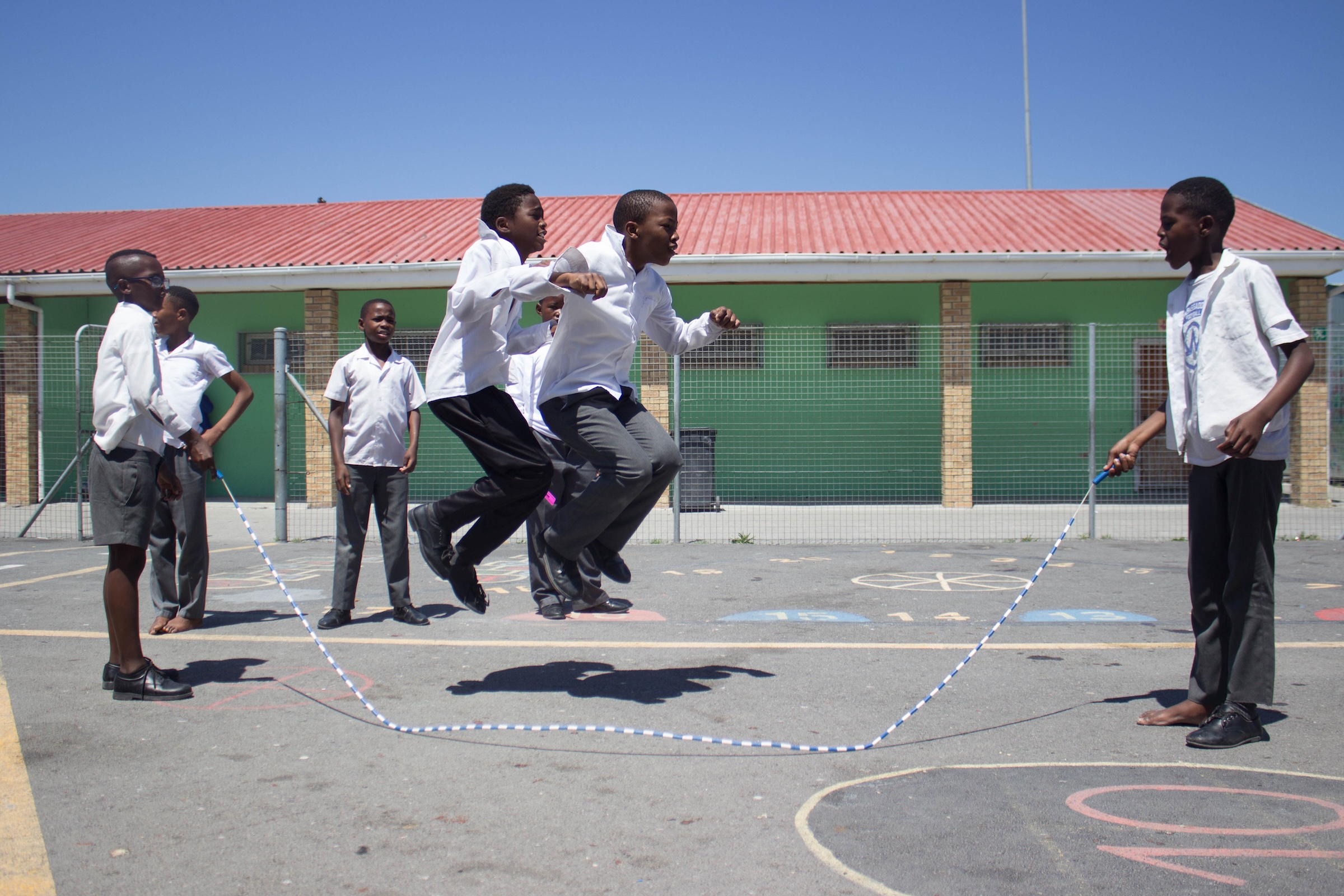
Children have a right to healthy lives. This includes having access to physical activity and healthy foods, which are proven to contribute to reducing the likelihood of NCDs.
Novo Nordisk focuses on supporting primary prevention of obesity in children through a multi-stakeholder and networked approach, grounded in community activation. We do this because we believe it is both our responsibility as a private sector actor in the NCD space and because we acknowledge that we cannot meet our corporate ambition of defeating serious chronic diseases without supporting prevention efforts alongside treatment offerings.
Through our Cities for Better Health programme, we work with partners in urban settings, where population growth and community concentration are high, to promote access to healthy food and physical activity, and we strive to generate evidence that supports policy decision-making and health system changes for improved well-being.
The Childhood Obesity Prevention Initiative under Cities for Better Health aims to accelerate the prevention of childhood obesity in disadvantaged, urban communities globally. Launched in six cities across Brazil, Canada, Japan, South Africa, Spain, and Australia, and guided by a global evidence-based framework, coalitions of cross-sector partners in each city will co-design, implement, and evaluate packages of holistic interventions to improve child health outcomes.
The scaled and sustained impact we all hope to see in the NCDs response is of course not possible without collabo-ration. Since 2019, the Novo Nordisk and UNICEF partnership has co-developed solutions and systemic change to build nutritious and healthy environments for children. The work, focused on Latin America, the Caribbean, and the East Asia and Pacific region, includes generating evidence, strengthening supportive policies, and scaling up local actions so that more children can eat well and be active.
Sustainability at Novo Nordisk means stepping up as a leader in our industry to focus on equitable health at scale. From medications to nutrition and movement, we believe that every child deserves the chance to live a healthy and productive life.