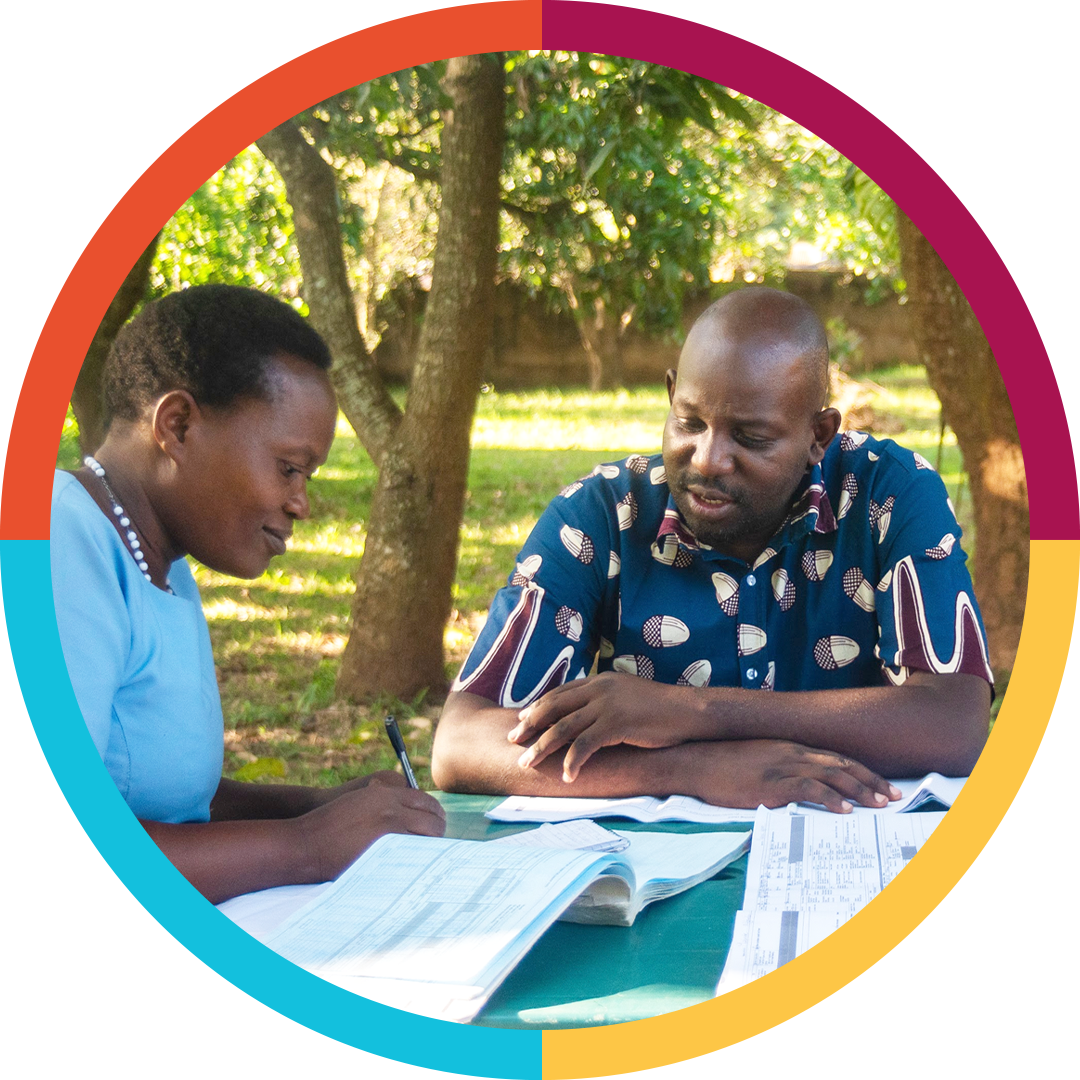

On 14 July, ahead of the International Congress on Obesity 2026 in Mexico City, the World Obesity Federation brought together nearly 70 advocates with lived experience of obesity from 16 countries spanning Africa, Asia, Europe, Latin America, the Caribbean, and North America for the Obesity Lived Experience Global Summit. The aim was simple on paper, but ambitious in scope: to strengthen the knowledge, skills, and confidence of global advocates so they can turn their own knowledge and experiences into credible evidence for policy change.
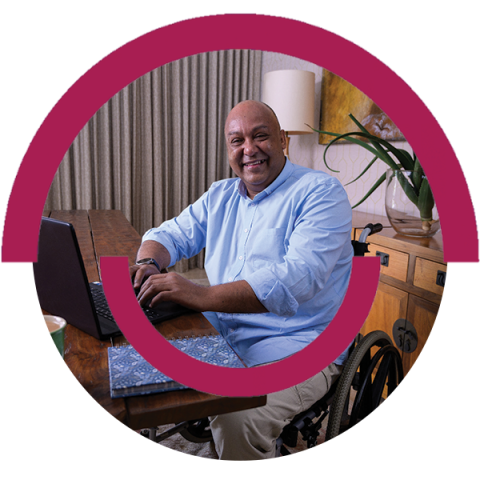
For World Obesity, people living with obesity need to be part of every stage of health policy and decision-making, not simply consulted after the fact. That’s why we invited Mr Salih Hendricks, a global obesity and diabetes advocate from South Africa, to share his testimonial:
When people hear my story, they often focus on one diagnosis: Type 1 diabetes. After more than four decades of living with diabetes, they assume that everything I have experienced stems from that single condition. But my journey has taught me something much bigger. Obesity has also shaped my health, my disability, and my understanding of what it means to live with noncommunicable diseases (NCDs).
Obesity is a complex chronic disease that influences health across the lifespan and interacts with many other conditions. Attending the World Obesity Federation’s Lived Experience Summit and the International Congress on Obesity (ICO2026) was a turning point for me. I met people from around the world living with obesity in very different healthcare systems, yet many of us shared similar experiences of stigma, delayed diagnosis, unequal access to treatment, and the financial burden of care.
What struck me most was that these challenges crossed geographical and economic boundaries. Whether people came from high-income countries or low- and middle-income countries, many described the same barriers to timely, evidence-based obesity care. Our experiences reminded me that compassionate, person-centred care should never depend on where someone lives or what they can afford.
The framework below reflects how I now see obesity — not as an isolated condition, but as a complex chronic disease that influences biology, metabolism, inflammation, the development of NCDs, disability, rehabilitation needs, and ultimately quality of life across the lifespan.
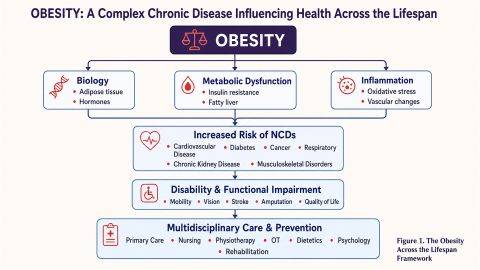
I have lived with obesity alongside Type 1 diabetes since my teenage years. Over the decades, my journey has included hypertension, diabetic retinopathy, neuropathy, peripheral artery disease, kidney complications, an above-knee amputation, and a stroke. These experiences have taught me that obesity and NCDs interact often throughout life, affecting physical health, independence, participation, mental wellbeing, and quality of life.
ICO 2026 reinforced that scientific progress alone is not enough. Around the world, many people living with obesity still struggle to access multidisciplinary care, evidence-based medications, rehabilitation services, and health technologies. Too often, treatment remains unaffordable or unavailable, and people are blamed before they are supported.
For me, this is where accountability becomes essential. It means more than recognising obesity as a chronic disease in policy documents. It means ensuring that people can access evidence-based care, multidisciplinary teams, rehabilitation, medications when appropriate, health technologies, and long-term support regardless of where they live or their ability to pay. It also means recognising people with lived experience as equal partners in research, education, policy development, and service design. Closing the leadership gap in NCDs requires translating recognition into meaningful action.
In South Africa, where obesity and other NCDs continue to place a growing burden on individuals, families, and the health system, many people still face barriers to timely diagnosis, multidisciplinary care, rehabilitation, and affordable treatment. Addressing these gaps is essential if we are serious about improving health equity and reducing preventable complications.
Returning to South Africa, I brought back more than knowledge — I brought back a renewed commitment to strengthen the connections between obesity, diabetes, disability, rehabilitation, and quality of life. Prevention, treatment, rehabilitation, disability inclusion, and lived experience should form one integrated response that helps people not only survive but live healthier, more independent lives.
My hope is that future generations won't wait for complications before obesity is taken seriously — placing it at the centre of equitable, person-centred prevention, care, research, and rehabilitation.