
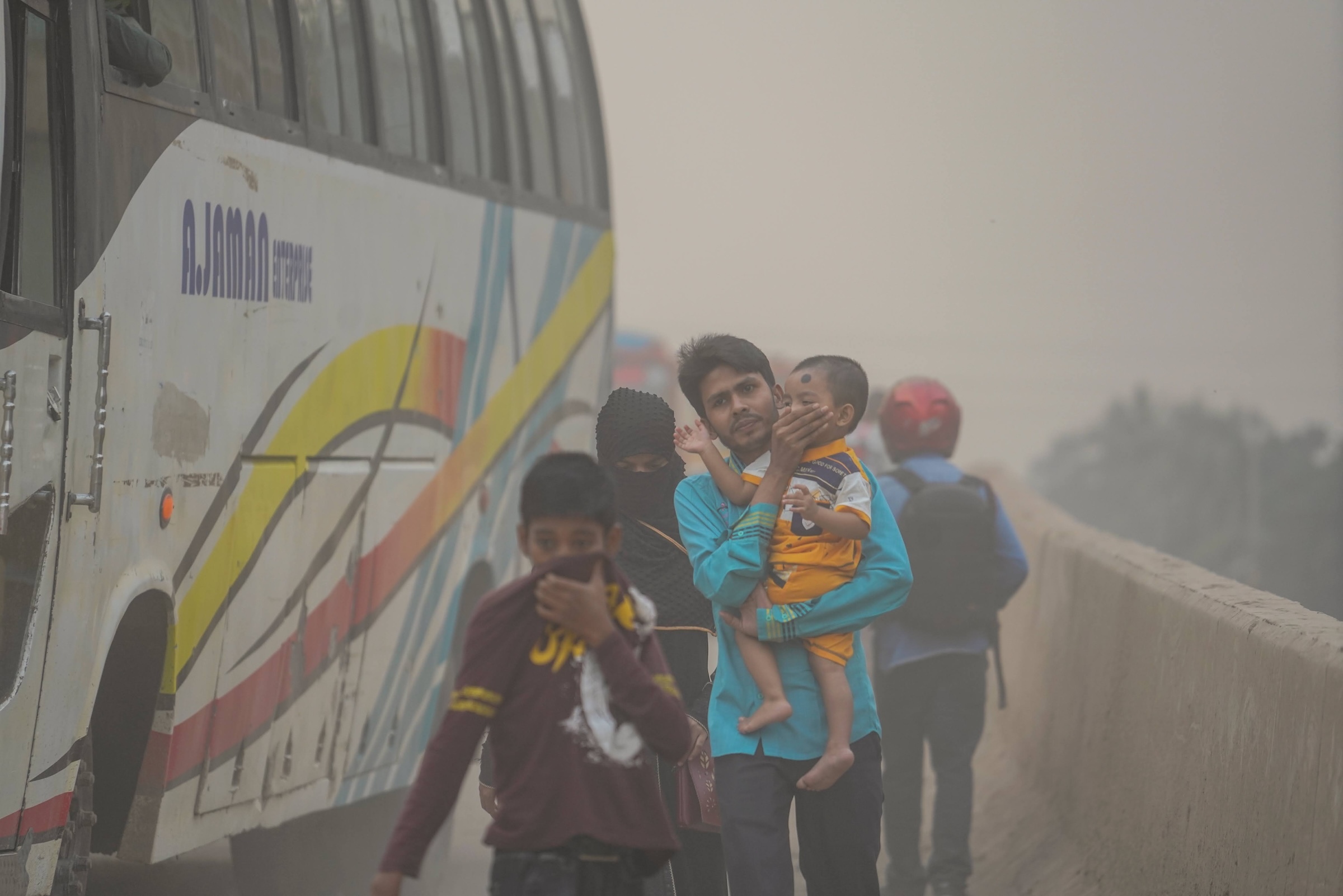

Each year, International Youth Day is an opportunity to celebrate the role of youth in global development, but it is also a reminder that today's youth are inheriting two of the defining challenges of our time: air pollution and climate change. Though often discussed separately, both are driven largely by our dependence on fossil fuels.
Across the world our youth breathe unsafe air every day, in their schools, in their homes, and in their communities. This exposure is mostly outside of their control - shaped by policy decisions on energy, transport, urban planning, and industry. Air pollution is often seen only as an environmental issue, but in reality, it is much more.
It is a health issue, contributing to noncommunicable diseases (NCDs) and other health harms from exposure beginning in the womb and continuing across the life course. It is an equity issue, with vulnerable and disadvantaged populations bearing the highest burden. And it is a human rights issue, including child’s rights, as everyone has the right to grow up and live in a healthy and sustainable environment. As we celebrate International Youth Day, we must make the case that creating a breathable planet is not just an environmental imperative, but an investment in the health, rights and futures of our youth.
For today's young people, unsafe air has been the norm from birth. 1.8 billion children under the age of 15, or 93% of children worldwide, breathe air that puts their health and development at risk. While air pollution impacts everyone, some age groups are uniquely vulnerable and face specific risks. The damage begins before birth, with exposure to air pollution in the womb linked to congenital disorders and low birth weights. Children breathe twice as fast as adults, are more likely to breathe through their mouths, and are closer to the ground, exposing them to higher concentrations of pollutants, especially from vehicle exhausts. As children’s lungs are still developing and they have weaker immune systems, they are also more susceptible to adverse health impacts. Developing an NCD as a child has significant impacts on their health, education, and wellbeing across the life course. Air pollution is not only a present-day health crisis; it is a mortgage on the health of future generations. Climate change also exacerbates air pollution. Climate warming and extreme weather events including wildfires and droughts can cause worse air quality. As both climate change and air pollution share the same driver, burning fossil fuels, they share many of the same solutions.
Governments have committed to reducing air pollution, including the target to halve deaths from air pollution by 2040, in the WHO Updated roadmap for an enhanced global response to the adverse health effects of air pollution. Last year, governments also committed to several actions to reduce air pollution as part of the Political Declaration on NCDs and Mental Health. International law has reaffirmed governments’ obligation to act, recognising the right to a healthy environment. The report of the Special Rapporteur on the human right to a clean, healthy and sustainable environment published earlier this year outlines the need for states to urgently advance clean air measures to meet their international and human rights obligations.
Fortunately, solutions already exist. Cities and countries around the world are implementing policies that improve air quality while delivering benefits for health, climate and sustainable development. The evidence is clear. What is missing is not the knowledge, but the political will to implement these solutions at the speed and scale required. NCD Alliance’s recent report, A Breathable Planet: Best Practices for Clean Air Policies to Meet NCD Targets, offers practical examples to support governments to move from commitments to meaningful action.
Young people are not just waiting on the sidelines. All over the world, youth advocates, health professionals and medical students are moving from protest to policy design, helping shape national climate commitments, regional frameworks recognising clean air as a human right, and clean air legislation. When young people are engaged as policy actors rather than symbols, commitments become measurably stronger. Meaningful engagement must go beyond consultation, because those who will live with the outcomes of the 2040 target must be able to hold governments accountable for it. And the coming years offer clear moments to hold them to account, including in the 2027 UN High-Level Meeting on Universal Health Coverage, where the health costs of air pollution will be impossible to ignore, and the second Conference on Transitioning Away from Fossil Fuels in Tuvalu, which must turn momentum on phasing out fossil fuels into implementation.
This International Youth Day, we recognise the leadership of young people calling for clean air and their right to a healthy environment. Reducing air pollution is one of the most effective ways to prevent NCDs, protect the planet, and create healthier, more equitable societies for future generations. Young people are standing up and demanding change. Governments must now deliver on their commitments and act at the scale and speed this crisis requires.


Angela Fernanda Bedoya Horta

Nomundari Urantulga