
On World Refugee Day much of the conversation rightly focuses on protection, shelter, and livelihoods. But another question receives far less attention: What happens to a person living with diabetes, hypertension, or another chronic disease when displacement interrupts their access to care?
58-year-old Asha, who lives in Dadaab, a displacement-affected settlement in Kenya, suddenly fell ill. Her blood pressure had reached a dangerous 201/126 mmHg.
Asha was unaware of her condition — severe hypertension. Like many people in her community, she had limited access to health education, regular screenings, or consistent medication.
It was only after she fainted and sought care that she learned her blood pressure had reached dangerous levels. Through regular follow-up, medication, and support from community health workers, Asha was able to bring her condition under control and make changes to improve her health.
People move, but health systems often do not move with them
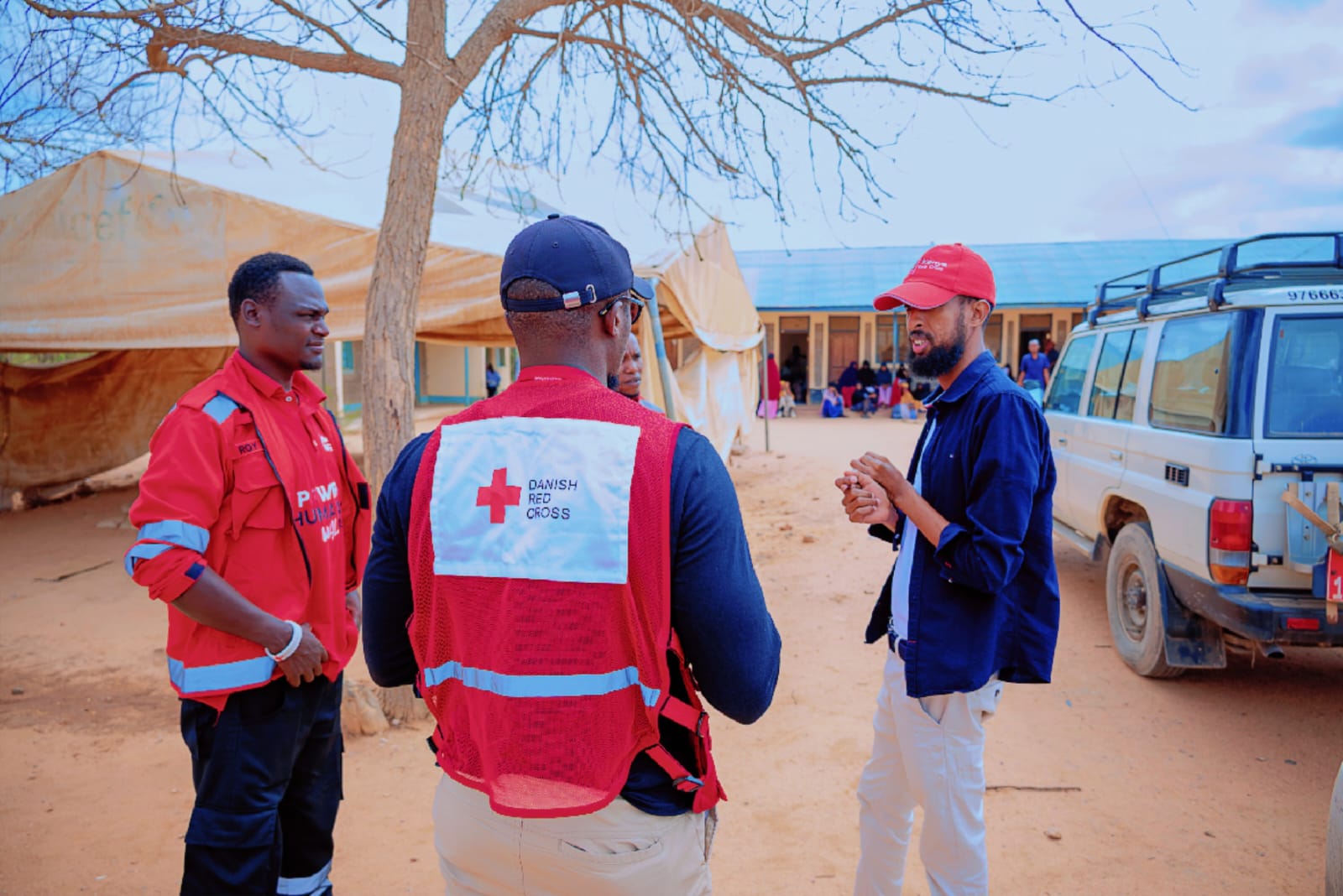
At the Kenya Red Cross and the Danish Red Cross, we have seen the same challenge emerge time and again: people move, but health systems often do not move with them. Medical records do not travel with patients. Referral systems often stop at administrative boundaries. People may be forced to restart treatment pathways when they move from one country to another.
Noncommunicable diseases (NCDs) – especially cardiometabolic diseases – are among the leading causes of premature deaths in Eastern Africa, accounting for up to 40% to 50% of all regional deaths. The burden is particularly severe in humanitarian settings, where displacement and weak health systems increase vulnerability.
The impact is especially acute among displaced populations along the Kenya – Somalia border, where hundreds of thousands of people move within and between the countries due to conflict, drought, flooding, and economic instability. In Dadaab, one of the world’s largest refugee camps, health data has identified hundreds of cases of hypertension and diabetes affecting thousands of people and families like Asha.
Asha’s story is a reminder that NCDs do not disappear during crises. Diabetes does not stop when a family is forced to flee. Hypertension does not pause during a drought. People continue to need treatment, monitoring, and support wherever they are. Yet for displaced populations, continuity of care is often one of the first things to be disrupted.
To address these challenges, partners in Kenya and Somalia have for years worked together to strengthen cross-border referral systems for people living with NCDs. Through the Continuity in Crisis initiative, founded by Novo Nordisk Foundation, community health volunteers, health facilities, and local authorities collaborate to improve referral mechanisms, follow-up, and information sharing across the border. The goal is clear: a person should not lose access to care simply because they move.
The challenge extends far beyond the Kenya – Somalia border. In Kalobeyei, northern Kenya, efforts supported by the NCD Alliance, Danish Red Cross, and Kenya Red Cross have similarly focused on improving access to NCD care for refugee and host communities. The key learning is that integrating NCDs within disaster response nationally and locally can improve life for people living with NCDs in a country where multiple humanitarian crises are taking place simultaneously.
Today, these efforts continue through the Continuity of Cardiometabolic Diseases Care in Crisis programme (CiC II), which works to strengthen continuity of care for people living with cardiometabolic diseases in Kenya, Somalia, and Ethiopia. Through health screenings, strengthened health services, community engagement, and support for treatment adherence, the programme aims to help more people access diagnosis, medicines, and ongoing care.
At the Kenya Red Cross and Danish Red Cross we have seen how displacement can interrupt care for people living with chronic diseases — and how difficult it can be for health systems to respond to the realities of mobile populations.
On World Refugee Day, we believe continuity of care must become a larger part of the conversation on displacement and health. Displaced people living with NCDs should not have to choose between safety and treatment.
As displacement continues to rise globally, health systems and humanitarian responses must be designed around people — not borders.