
Following the fourth UN High-Level Meeting on NCDs and Mental Health (HLM4), attention has rightly turned to translating political commitments into action. This means investing in implementation, holding governments and partners accountable for their promises, and building health systems that reflect the realities of people’s lives.
The upcoming Global Summit for Eye Health (Global Summit) is a timely opportunity to advance this agenda by securing ambitious commitments and accelerating progress for the more than one billion people living with avoidable vision impairment and blindness. Led by Member States, the Global Summit will be hosted by the Government of Antigua and Barbuda, with Bangladesh, Guyana, and Nigeria as co-hosts, and the World Health Organization supporting as a technical collaborator.
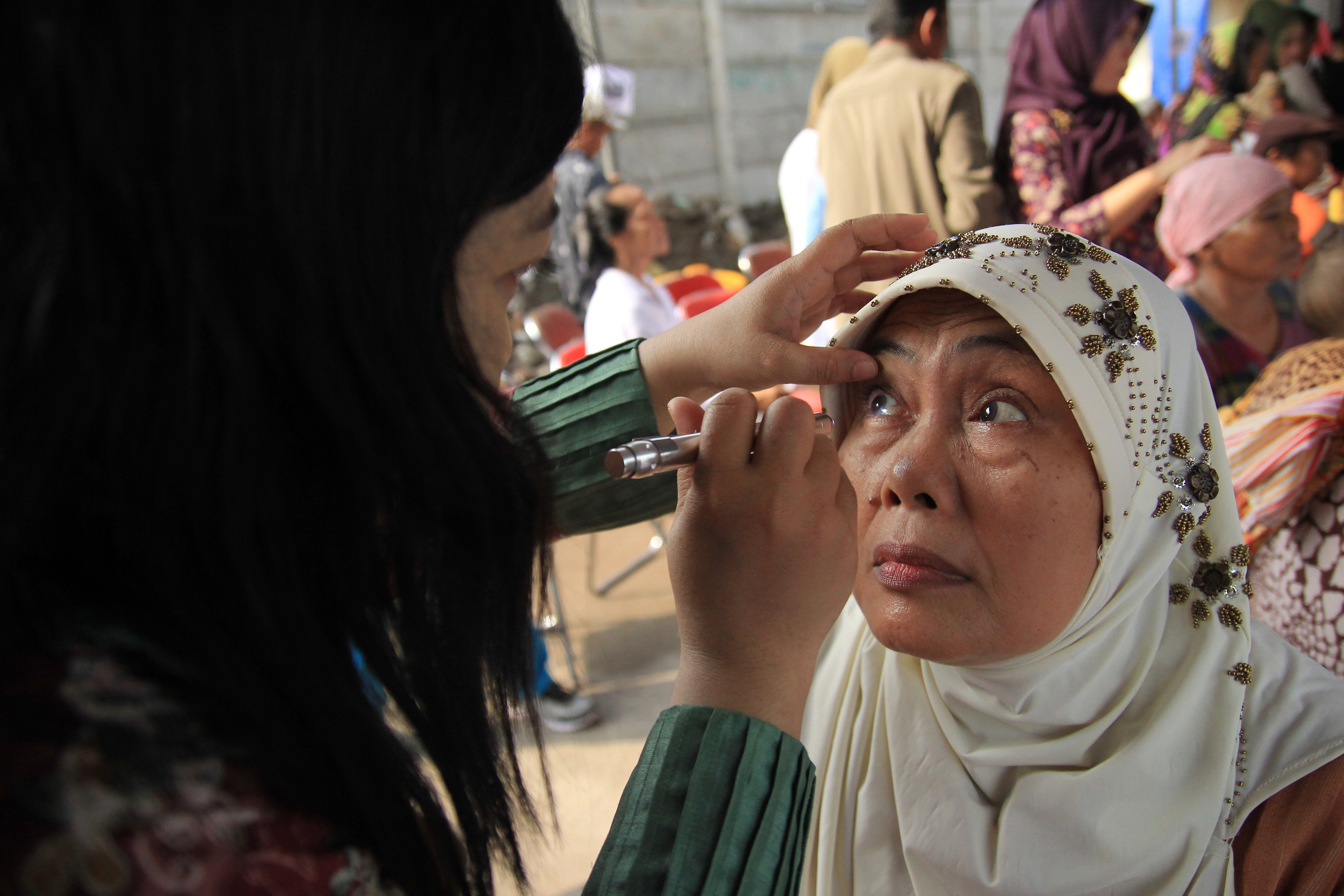
Some of the most common eye conditions are NCDs and several prevalent NCDs, including diabetes, can lead to eye health conditions if not addressed in a timely manner. Vision plays a critical role at every stage of our lives. We often take it for granted, but vision impairment can make it harder for us to move about safely, read and write, participate in school and work, and remain involved in our communities. The case for action is also economic. In low- and middle-income countries, every $1 invested in eye health can yield a $28 return; a $7.1 billion investment could therefore unlock a $199 billion boost in productivity over the next 5 years.
Despite these connections, health systems and global policies too often treat eye health separately from wider NCD efforts. As a result, progress on preventing and controlling NCDs has slowed and remains insufficient. That is why The Fred Hollows Foundation, a High Impact Partner of the Global Summit, is working with the NCD Alliance (NCDA) to position the Global Summit as a broader opportunity to mobilise action across the NCD agenda, not only eye health.
“Eye health is intrinsically linked to other chronic diseases and must be part of broader NCD prevention and care agendas. Care must be accessible to everyone, everywhere, at the primary health care level, under the principles of Universal Health Coverage (UHC),” emphasises Alison Cox, NCDA Policy and Advocacy Director.
The NCDA’s recent endorsement of the St. John’s Global Compact for Eye Health (Global Compact) sends an important signal: we cannot treat eye health as a niche issue outside the global NCD agenda but must address it as central to that agenda. As the first multistakeholder declaration on eye health and the unifying document of the Global Summit, the Global Compact sets out a shared vision, a common approach to action and collective responsibility for progress. By endorsing it, the NCDA has demonstrated what leadership and accountability after HLM4 can look like in practice. The endorsement recognises that addressing vision impairment and blindness is not only an eye health priority, but also part of building healthier, more equitable, and inclusive societies.
“If we want to implement global commitments to achieve better health for all in a world of shrinking funding, and reform the global health architecture so that it responds to the current and future needs of people living with NCDs, we must break down disease-specific silos and work together to build integrated and inclusive health systems,” points out Alison Cox.
As populations age and the burden of NCDs continues to grow, we must integrate eye health and broader sensory functioning into NCD care. These are not separate agendas, but interconnected priorities at the heart of UHC and people-centred health systems. Through the Global Summit, we have an opportunity to put this approach into practice by mobilising political leadership, securing commitments, and strengthening accountability.
The Global Summit is more than another global meeting. Governments, donors, development partners, the private sector, and civil society organisations, are being asked not only to endorse a shared vision, but to make concrete, implementable commitments that can be tracked over time. This focus on accountability recognises that declarations alone do not improve people’s lives. Progress depends on sustained leadership, transparent monitoring, and follow-through.
This approach aligns closely with the NCDA’s call for leadership and accountability following HLM4. As we move from global mobilisation to long term action, we must unite around shared goals, measurable commitments and collective responsibility. The success of both the HLM4 and the Global Summit will ultimately be judged not by the declarations made, but by what happens next.
Our task is clear: maintain momentum, strengthen accountability, and advocate for integrated approaches that place people at the centre. By bringing NCDs, sensory functioning, and eye health together, we can help turn global promises into lasting improvements across health systems and in people’s lives.